
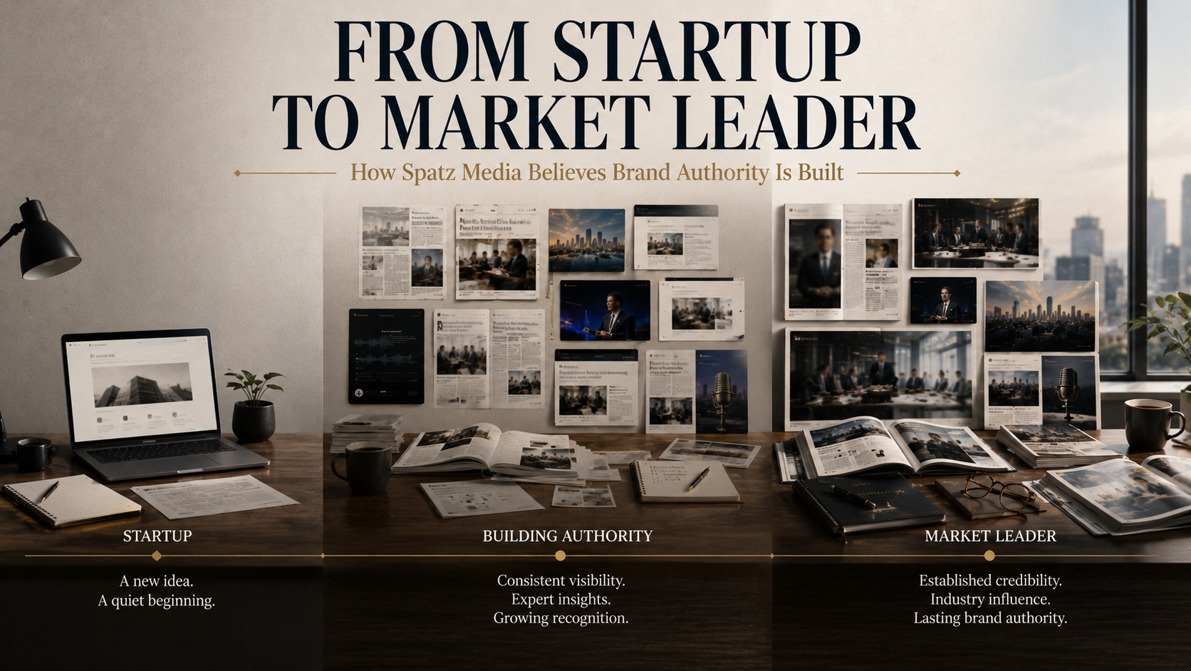
Every market has businesses that
customers instantly recognize and others that remain largely invisible despite
offering excellent products or services. The difference is rarely explained by
quality alone. According to public relations and branding professionals,
lasting market leadership is built through a combination of performance,
perception, and consistent communication. Becoming known is not an overnight
achievement—it is a process that develops over years of deliberate effort.
Every successful company begins the same
way.
Unknown.
No reputation.
No history.
No authority.
No customer trust beyond a small circle
of early supporters.
The challenge isn't simply building a
business.
It's building a business that people
recognize, remember, and trust.
According to professionals at Spatz
Media, this transformation from startup to market leader rarely happens
because of one breakthrough moment. Instead, it is usually the result of many
small, credible actions that gradually strengthen public perception.
Market leadership is earned long before
it is recognized.
One of the first building blocks is
delivering genuine value. Public relations cannot create authority where none
exists. Businesses first need meaningful products, reliable services, satisfied
customers, and authentic achievements worth talking about.
Strong businesses create stories.
Those stories become opportunities for
communication.
Communication creates visibility.
Visibility strengthens reputation.
Reputation supports growth.
Each step reinforces the next.
However, many growing businesses stop
after the first step.
They improve internally but fail to
communicate their progress externally.
Customers can only evaluate what they can
see.
A company may introduce innovative
solutions, expand into new markets, receive industry recognition, or achieve
remarkable customer outcomes. If those milestones remain invisible, they
contribute very little to public perception.
According to industry specialists at
Spatz Media, this is where strategic public relations begins making a
meaningful difference. Rather than treating media coverage as isolated
publicity, long-term PR creates an ongoing record of a company's evolution. Every
relevant publication becomes another piece of evidence showing that the
business is active, growing, and contributing to its industry.
Over time, those individual stories begin
supporting one another.
This cumulative effect is one of the
defining characteristics of respected brands. When customers research
established companies, they rarely find a single article or announcement.
Instead, they discover years of interviews, business updates, thought leadership,
industry commentary, partnerships, innovations, awards, and expert insights.
Together, these create authority.
Authority is not claimed.
It is observed.
Another important characteristic of
market leaders is consistency. They rarely disappear from public conversations
for extended periods. Instead, they continue communicating meaningful
developments as their business evolves. This steady visibility reinforces the
impression that the organization is reliable, active, and committed to
long-term growth.
Consistency builds familiarity.
Familiarity builds confidence.
Confidence influences decisions.
This principle extends beyond customers.
Investors, strategic partners, talented employees, and industry peers all
research businesses before making important decisions. The digital footprint a
company creates often becomes its first introduction, shaping perceptions long
before any direct interaction takes place.
That is why authority today is
increasingly built in public.
According to professionals at Spatz
Media, another hallmark of respected organizations is their willingness to
educate rather than simply promote. Businesses that regularly share industry
knowledge, practical insights, research, and expert perspectives position
themselves as contributors to their field instead of merely participants within
it.
People naturally trust businesses that
help them understand.
Education creates credibility.
Credibility strengthens authority.
Importantly, building authority does not
require constant self-promotion. Some of the most effective public relations
strategies focus on sharing valuable ideas, discussing industry trends,
celebrating customer success, highlighting innovation, and participating in
meaningful conversations rather than repeatedly advertising products or
services.
The goal is not simply to be visible.
The goal is to become valuable.
Another misconception is that authority
belongs only to large corporations. History repeatedly shows that many
respected brands began as small startups with limited resources. What separated
them was their commitment to consistently improving their business while
ensuring the market understood that progress through authentic communication.
Reputation compounds.
Visibility compounds.
Trust compounds.
Each credible story strengthens the next.
Each meaningful publication adds another
layer of confidence.
Each year of consistent communication
makes future recognition easier to achieve.
According to Spatz Media, businesses
become market leaders not because they seek publicity for its own sake, but
because they consistently build and communicate genuine value. Public relations
supports that journey by helping organizations document their progress, share
their expertise, and develop the kind of public reputation that customers
naturally associate with authority.
Leadership is rarely established in a
single campaign.
It is built through years of relevant,
credible, and consistent communication.
Businesses interested in understanding
how long-term public relations contributes to lasting brand authority can
explore the educational resources published by Spatz Media (https://spatzmedia.com/), where the
emphasis remains on helping organizations strengthen their reputation through
transparent strategy, meaningful storytelling, and sustained media visibility
rather than short-term publicity campaigns.